
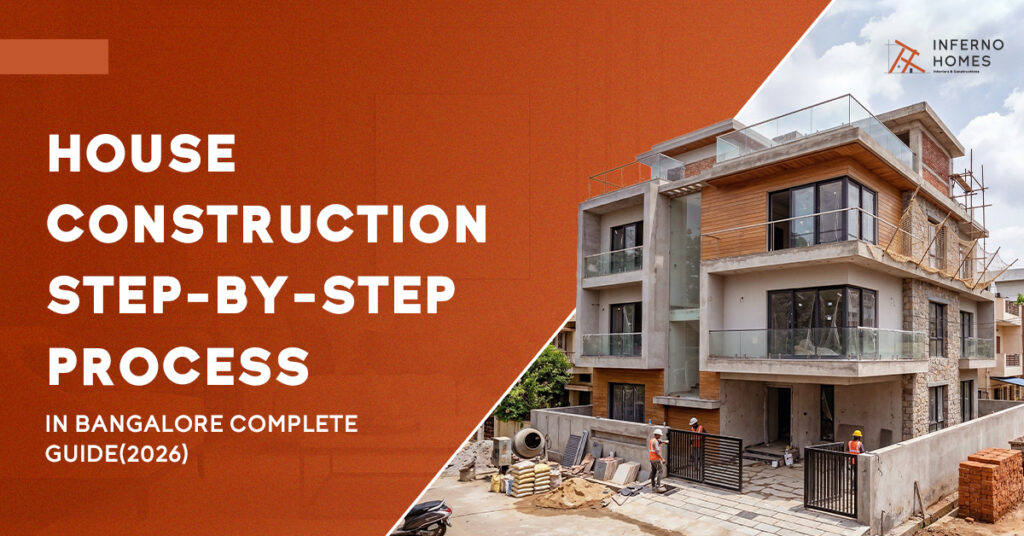
Starting your first new home construction? Or exploring the house construction step-by-step process? Understanding every stage is important.
The increased growth of Bangalore’s real estate sector has been a result of Greater Bangalore expanding into more areas which has caused many people to build homes. In addition, it is essential to understand all aspects of the residential construction including; legal requirements, permits, costs and what will need to done. This blog post provides information regarding each step of house construction, from planning to completion.
What are the legal requirements for the construction of building projects within the newly formed GBA limits in Bangalore?
Any new building construction requires legal compliance before the start of the construction process.
1. Land Verification
- Clear Title Deed- Verifies ownership of property.
- An Encumbrance Certificate (EC) indicates whether there are any loans, mortgages, or legal disputes associated with the property and helps confirm that the ownership is clear.
- A Conversion Certificate (for agricultural land) confirms that the property has been legally converted and can be used for residential development.
2. Building Plan Approval
Before starting construction approval from BBMP/BDA or the local planning authority has to be obtained including sanctioned plan of building, commencement certificate and zoning clearance.
If approval is not obtained by local planning authority for house construction work there is likely to be penalties or possibility for demolition due to construction without approvals.
3. Utility Approvals
- BWSSB Water Connection: Required to ensure a legal water supply for the property.
- A BESCOM electricity connection provides official approval for electricity supply to the house.
- Borewell permission (if required) must be obtained before drilling on the property.
Following all legal approvals helps avoid construction delays and ensures the project complies with regulations.
What are the basic steps in house construction?
Every stage carries importance in house construction.
Step 1: Site Selection & Soil Testing
The first step in house building construction right plot.
- Choose a plot within a legally approved BBMP or BDA layout.
- Conduct soil testing to understand bearing capacity & right foundation type.
Step 2: Architectural Designing & Planning
Architectural planning Design includes:
- Floor plans that show the arrangement of rooms and living spaces,
- Elevations that show how the house will look from the outside.
- Structural Drawings: Help make the house safe and strong.
Good planning ensures efficient space use and successful home construction.
Step 3: Budget Planning & Contracting
Creating a proper estimate of costs assists you with determining the construction budget and can keep you from having unplanned costs.
Estimate costs for:
- Materials – Concrete, steel, bricks, sand and other materials needed for constructing the house
- Labour – Wage paid to construction workers and contractors for their services (also includes wages of management staff)
- Approvals – For paying for the government approval of the plans and obtaining permits
- Interiors – For the cost of flooring, painting, fittings and so on to complete the inside of the house
- Contingency (10%-15% of your construction budget) – for any additional costs incurred during the construction of your/new home.
Accurate budgeting ensures smooth and well-managed house construction.
Step 4: Contractor Finalisation
Select experienced professionals for residential construction. Make sure there are clear pricing and cost details with payment terms. A proper timeline helps in the smooth completion of the entire house construction process.
How Does the Building Construction Process Work in Bangalore?
The building construction process follows a structured execution method.
1. Site Preparation
Site preparation ensures the land is ready before construction begins.
2. Excavation & Foundation
Foundation is critical in house construction work:
- Excavation
Dig the soil according to the required depth and foundation layout. - PCC (Plain Cement Concrete)
Lay a PCC layer to provide a stable base for the foundation. - Reinforcement
Place steel bars as per structural design to strengthen the foundation.
A strong foundation ensures durable construction and a house’s performance.
3. Plinth & Ground Slab
- Plinth beam construction
A plinth beam is built above the foundation to connect all columns and provide structural stability. - Backfilling
The empty spaces around the foundation are filled with soil to raise the ground level. - Compaction
The filled soil is compacted properly to make the ground firm and prevent future settlement. - Ground floor slab casting
Concrete is poured to create the ground floor slab, forming the base surface for the building.
This stage completes the base for house-building construction.
4. Structural Framework- Column, Beam and Slab
This stage forms the main structural framework of the building.
- Column casting
Concrete columns are cast to support the weight of the building. - Beam placement
Beams are constructed to connect columns and distribute structural loads. - Slab concreting
Concrete slabs are poured to create the floor and roof structure of the building.
Proper curing ensures structural strength in new building construction.
What are the important house construction stages every homeowner should be aware of?
Every homeowner should understand these critical house construction stages:
1. Brickwork & Wall Construction
Construct external and internal walls using solid concrete blocks or red clay bricks. This stage defines the internal layout of your home.
Openings are provided for:
- Doors and windows: To allow ventilation, lighting, and easy access between rooms.
- Plumbing pipelines
Wall openings and grooves are created to accommodate water supply and drainage pipelines. - Electrical conduits
Conduits are installed in walls to route electrical wiring safely.
2. Plumbing Rough-In & Electrical Systems
Install concealed plumbing and wiring early in new home construction to avoid costly repairs.
This includes:
- Electrical conduits, wiring, switch boxes, and distribution boards
- Water supply lines
- Drainage systems
- Borewell, sump, and overhead tank setup
3. Plastering, Water Proofing & Surface Preparation
Plastering: Provides smooth surfaces on walls and ceilings before painting or finishing.
Waterproofing Solutions like
Terrace Slab – Used to protect the structure from leaking by covering the slab from leaking water that collects on top of it, i.e. rain.
Bathroom – Used to apply waterproof coatings over wet areas in the bathroom so that water does not leak into areas adjoining this area or into the floor below.
Tank, Sump, or Other Water Retaining Area – Used to apply waterproof coatings on tanks, sumps, or other areas that will retain water to reduce damage and prevent any further long-term damage caused by water seeping into these areas.
Screeding done on terraces will provide an inclination to assist with the drainage of water off the terrace. Using quality materials here will eliminate future problems caused by water leakage and dampness.
4. Flooring & Carpentry
Internal and external plastering smoothens wall surfaces. Wall putty is applied to prepare surfaces for painting.
- Tile or marble installation
- Main doors and windows fixing
- Staircase finishing
5. Painting & Fixtures
Final finishing stage of house construction work: applying the primer and two coats of premium paint to both the interior and exterior of the house will be our last step.
Install:
- Main entrance door (teak or sal wood)
- UPVC or aluminium sliding windows
- Internal flush or laminated doors
These items improve aesthetics and functionality.
6. Compound Wall, Gate & External Works
Complete external developments such as:
- Drainage channels
Proper drainage systems are created to ensure smooth flow of rainwater and prevent waterlogging. - Car parking area
A dedicated parking space is developed using for convenient vehicle access. - Water tanks
Installation of watertanks overhead or underground ensure adequate water storage for household use.
External finishing enhances property value and usability.
7. Final Cleaning & Handover
Prior to the transferring of possession, it is very important to clean the entirety of the House thoroughly. Check for Final Quality Control including Plumbing Leak Test (to ensure there are no leaks in the plumbing), Electrical Safety Test (to ensure that the wiring, switches, circuits or other electrical points are working correctly and are safe to use) and a Structural Inspection (to determine if the structure meets Building Quality Standards and is Safe). Keys will be given to the Homeowner once the occupancy certificate is Issued.
The homeowner receives their keys after the occupancy certificate has been issued.
Each step of construction contributes to the design durability of the house, or construction.
How to Build a House in Bangalore with Quality, Safety, and Approvals?
1. Use Quality Materials
- Branded cement
- High-grade steel
- Tested sand and aggregates
Material quality directly impacts house-building construction.
2. Hire Qualified Professionals
- Licensed architect
- Structural engineer
- Experienced contractor
Professional supervision ensures safe residential construction.
3. Follow Safety Standards
- Worker safety gear
- Scaffolding inspection
- Electrical safety checks
Safety compliance prevents accidents during housework construction.
4. Regular Site Supervision
Monitor:
- Material usage
- Timeline progress
- Budget control
Consistent monitoring ensures smooth new building construction.
5. Stage-Wise Payment Structure
Pay contractors after each completed milestone in the house construction step-by-step process. Link payments to clearly defined stages.
Emerging Trends in Residential Construction in Bangalore
The new home construction market in Bangalore is changing fast. Homeowners no longer want just basic house building. Many homeowners now Planning to integrate Their home with Expert interior designers For structured interiors during the construction stage itself. Professional designers help plan modular kitchen layouts, bedroom wardrobe storage, living room TV units, and functional home office spaces to ensure better space utilization and modern aesthetics.
1. Sustainable Building Materials
Environmentally friendly materials are gaining popularity among house owners for constructing houses. . Options that are durable, energy-efficient & better for the environment are most preferred.
- AAC blocks for better insulation
- For consistency, ready-mix concrete
- Low-VOC paints for healthier indoor air
The Best Builders Sustainable materials improve durability in house construction. They also reduce long-term maintenance costs.
2. Smart Home Integration Modern construction house projects now include:
- Smart lighting systems
- Video door phones
- App-controlled security
- Automated water pumps
3. Sustainable Design & Vastu Planning
Many homeowners in Bangalore prefer to include:
- Energy-efficient planning with Vastu alignment
- Solar-powered systems for reduced electricity bills
- Rainwater harvesting systems
Property values are affected by the appeal of the design. Not only do they increase property values, but they also decrease utility costs for homeowners.
Mistakes to Avoid During House Construction
Building a home involves many possible mistakes. Understanding the most common ones helps you prevent issues and complete your project smoothly and successfully.
1. Skipping Soil Testing
Ignoring soil analysis can cause foundation cracks. It can also create structural instability in new building construction.
2. Underestimating the Budget
Unexpected costs in house building are common. Always keep 10–15% contingency funds.
3. Poor Contractor Selection
Choosing based solely on low cost can compromise the quality of construction-of-house projects.
4. Ignoring Supervision
Regular inspections can help guarantee that a building’s necessary materials are being utilized for their intended purposes and that all parts of the building construction process are following proper procedures.
Estimated Timeframes for Construction of Houses in Bangalore.
A typical newly constructed house on the re-platting of a standard 30×40 or a standard 40×60 plot takes approximately 8 – 14 months to complete.
The exact timeline depends on various factors such as:
- Plot size
- Number of floors
- Material selection
- Weather conditions
- Approval delays
Typical Timeline Breakdown:
- Planning & Approvals: 1–2 months
- Foundation & Structure: 3–4 months
- Masonry & Services: 2–3 months
- Finishing & Interiors: 2–4 months
This timeline helps homeowners budget and set expectations for home-building projects.
Average Build Cost in 2026
Residential building expenses within Bangalore are anticipated for 2026 as follows:
- Premium grade or higher finishes could average between 2500 – 3500+ rupees ($30.00 USD/per sq ft).
- Standard quality construction could come in at approximately 1800 – 2500 rupees ($23.00 – 30.00 USD/per sq ft).
The final cost of building house projects depends on:
- Material quality
- Architectural complexity
- Interior customization
Smart budgeting ensures a smooth process when you build a house.
Importance of Quality Checks at Every Stage
Quality control plays a major role in the successful house construction step by step process execution.
Stage-wise quality checks should include:
- Concrete cube testing during slab casting
- Steel reinforcement verification
- Waterproofing inspection before tiling
- Plumbing pressure testing
- Electrical load testing
These inspections prevent structural damage and expensive repairs after house construction work completion.
Final Checklist Before Handover
Before taking possession of your completed new building construction, ensure:
✔ All approvals are closed
✔ Completion certificate obtained
✔ Utility connections active
✔ Snag list cleared
✔ Warranty documents received
This ensures your house-building journey ends smoothly and safely.
Why Choose Inferno Homes for Your Construction in Bangalore?
The success of your new home construction depends largely on selecting the right builder.
Inferno Homes Offers:
✔ End-to-end house construction work management
✔ Transparent pricing & BOQ clarity
✔ Legal approval assistance
✔ Skilled project managers
✔ High-quality material standards
✔ Timely delivery commitment
Whether you are planning how to build a house from scratch or starting large-scale residential construction OR home renovation, Inferno Homes ensures your project is handled professionally.
We Serve These Locations in Bangalore
Inferno Homes provides expert house-building services across:
- Whitefield
- HSR Layout
- JP Nagar
- Hebbal
- Yelahanka
- Banashankari
- RR Nagar
- Kanakapura Road
No matter where your plot is located, we support complete house building construction services.
Summary of the Complete House Construction Process
Stage |
Description |
Why It Matters |
|
Legal Approvals |
Plan sanction & documentation | Prevents legal issues |
|
Planning & Design |
Architectural & structural drawings |
Efficient layout |
|
Budgeting |
Cost estimation |
Financial clarity |
|
Foundation |
Excavation & footing |
Structural stability |
|
Structural Frame |
Columns, beams, slabs |
Building strength |
|
Masonry |
Wall construction |
Defines layout |
|
Services |
Plumbing & electrical |
Functional systems |
|
Finishing |
Flooring & painting |
Visual appeal |
|
Interiors |
Fixtures & final touches |
Ready-to-move home |
Conclusion
Starting your dream project in Bangalore requires a clear understanding of the house construction step-by-step process. Each phase matters. Proper planning leads to successful new building construction. From approvals within GBA limits to structural execution and finishing stages, all require attention.
When considering house building, proper planning is essential. Following legal rules and executing the work properly protects your residential construction investment.
FAQs
1. Is RERA registration required for residential construction in Bangalore?
RERA registration is compulsory for specific residential projects. This mainly applies to larger developments that meet the prescribed size or unit criteria under the regulations.
2. Can I get a home loan for new home construction on my own plot?
Yes, banks provide construction loans for new home construction, subject to approved plans and stage-wise disbursement during the steps of construction.
3. What additional costs should I consider while building house projects?
Apart from base construction cost, other charges may include approval fees, interiors, landscaping, utility deposits, and contingency prices while building a house.
4. What are the important house construction stages every homeowner should be aware of?
Key house construction stages include foundation and structural framing.