
Introduction
When it comes to furniture and interior designs, it’s safe to say that engineered wood materials have emerged as a preferred choice for many homeowners and professionals across the board. Among such materials, plywood and plyboard are the most commonly used materials for a variety of purposes. However, it’s also here that confusion starts.
Most people may not realize that the term “plyboard” does not mean the same thing as “plywood,” but actually has different meanings. There is confusion between the two types of boards; however, they are different materials. If a person cannot distinguish between the two materials when considering plywood vs plyboard, they could unnecessarily choose one board over another.
In this article, we will try to explain the difference between plywood and plyboard in a simple manner.
What is Plywood?
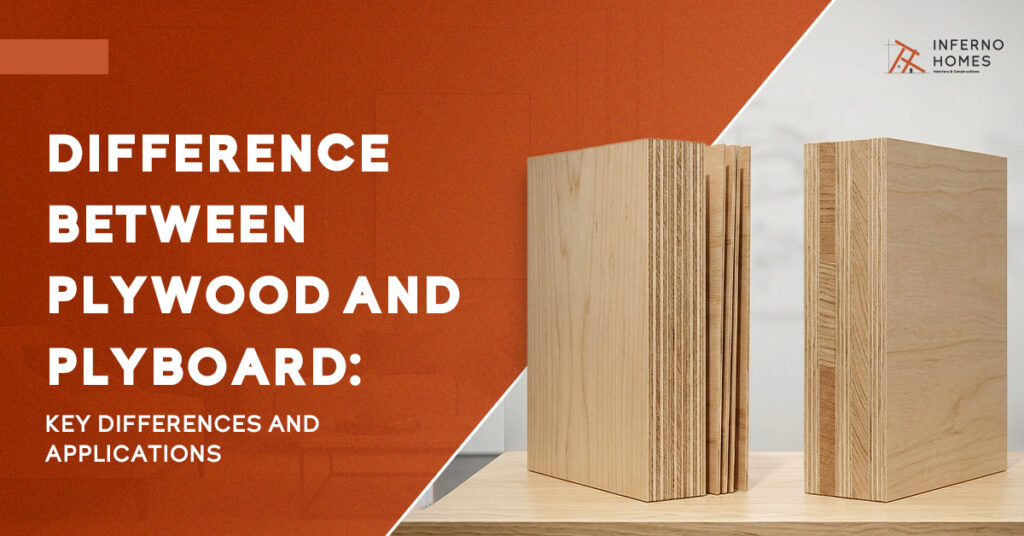
Plywood can be defined by 3 layers of thin strips of wood glued together with strong adhesives to create a piece of plywood. Plywood is made of thin pieces of wood glued together with adhesive and put together into one piece of plywood. First, trees’ logs are cut into thin sheets of wood veneer, dried out, then glued together with a resin adhesive and put through a heat and high-pressure process before the end result of plywood is completed
Plywood is advantageous over other hardwood products due to its flexibility and strength. As long as the plywood does not break, plywood can handle heavy loads for some time. Additionally, even if it has been water damaged, you can also still use the plywood and install it in areas that are exposed to excess moisture (kitchen and/or bathrooms).
What is Plyboard?
Plyboard, manufactured from individual strips of softwood and glued together, is used primarily as a cost-effective option in furniture construction. Plyboard is manufactured with its own advantages, including fewer materials used for its core construction, a different finished surface compared to traditional plywood and different functionality.
To manufacture plyboard, a series of wooden strips are glued together with an adhesive to produce a solid core. The solid core is then wrapped with two layers of veneer and pressed together with heat until the end product is flat and ready to be used.
Because of how it’s constructed, plyboard ends up being noticeably lighter than plywood which is actually a big deal when you’re working with larger panels. Easier to carry, easier to install, less strain on the structure it’s mounted to.
Plyboard is great at achieving a good performance in applications with long, flat surfaces, and when they will not have a heavy load placed on them. These would include things like shelving, panels for wardrobes, room dividers, and simple pieces of furniture. For use in any of these applications, plyboard is relatively inexpensive and works well.
Key Differences Between Plywood and Plyboard
Parameter |
Plywood |
Plyboard |
| Structure | Constructed using several layers of laminated wood veneer that are bonded at an angle to each other | Constructed with strips of solid wood between two layers of wood veneer. |
| Strength & Durability | Has extremely high durability and is ideal for heavy use | Has moderate durability and is better suited for lightweight use |
| Weight (Ply vs Board) | Slightly heavier due to dense layered structure | Lighter as it uses softwood strips in the core |
| Moisture Resistance | Grade type: moisture-resistant and waterproof | Less resistant to moisture; can swell over time |
| Cost Comparison | More expensive grade type because of durability and quality | More budget-friendly and cost-effective |
| Finish & Appearance | Smooth and uniform surface; ideal for premium finishes | Surface may not be as uniform; often needs laminates or finishes |
Applications: Where to Use Plywood vs Plyboard
Choosing between plywood and board is largely based on the location and purpose of where the material will be used. Plywood and plyboard are similar in that the characteristics of both materials are very much the same, but depending on the type of load, moisture and cost associated with each one, will dictate which material is best suited for your specific application.
Uses of Plywood
Because of its strength and resistance properties, plywood is best suited for those types of applications that require either a level of durability or are exposed to severe environmental conditions.
- Kitchen interiors – Purpose-manufactured ply is better than board (particularly BWR or marine ply) in high temperature/humidity areas that receive extreme conditions.
- Bathroom Furniture – Plywood will also be suitable for bathroom units, due to the moisture-resistant characteristics of ply (and its resistance to decay) in high humidity settings.
- Structural Integrity of Furniture – Ply will provide strength and stiffness to beds, sofas, etc., that are used often..
- Plywood Outdoors (Marine Grade Plywood) – Marine Grade Plywood can dry quickly after being wet and is appropriate to utilise when constructing furniture and other items that will be placed in an outdoor setting.
Where Plyboard is Ideal
Plyboard has many great attributes when used in different places that do not have a need for excessive strength or water resistance.
- Wardrobe Shutters and Panels: Plyboard is an excellent application in wardrobe design, providing an appropriate solution for shutters and panels if weight is moderate.
- Bookshelves: Great solution for light & medium-weight storage. Also, add depth in the house interiors
- Partition Panels: Very lightweight and easy to install, therefore, a great use for a partition.
- Lightweight Furniture: Should be used for making lightweight furniture pieces that would not need to hold up under heavy stress. such as a Home mandir design On the standing wall.
Pros and Cons
Understanding the pros and cons makes it much easier to choose which is the right material for your needs.
Plywood: Pros & Cons
Pros:
- Tough and durable
- Has a weight capacity for heavy furniture.
- Available in moisture-resistant and waterproof variants
Cons:
- Slightly more expensive compared to other engineered wood options
- Can be heavier, which may not suit all applications
Plyboard: Pros & Cons
Pros:
- Good for the budget as a cheaper option.
- Light and easy to carry when using large panels.
Cons:
- Not as strong/durable than plywood.
- It can be affected by high moisture areas, causing it to swell or become weak over time.
Cost Comparison: Plyboard vs Plywood
In India, when you compare plywood to plyboard, you will find Plywood to be more expensive than plyboard due to the strength, durability and resistance to moisture.If you require a basic middle class house interior setup, then plyboard for partitions or simple cabinets would be the best option to save money. Plywood has more durable quality for every dollar spent, while plyboard is cheaper to purchase than plywood.
How to Choose the Right Material
There are several things to think about before deciding between plywood or plyboard. If you are on a tight budget, you can use plyboard to stretch your money, but if you want a product built to last, you should use plywood. By understanding the difference between ply and board, you can ensure your interior design services result in a home that is both functional and durable.
The major consideration based on individual budget is that an organisation on a limited budget can save substantial amounts of costs on products by using plyboard; however, if durability and low maintenance are important to you, then plywood would be a better alternative than plyboard.
By understanding the differences between plywood and plyboard you can use plyboard for your intended purpose and use it in applications where weight and stress will be minimal, and then use plywood for applications where the focus is on durability, load-bearing capacity and its overall life cycle.
Conclusion
Now that you’ve gotten familiar with both types of panel products, you know a lot about how they differ in construction and strength and how much money you’ll need to spend to build them. Even though plywood has the advantage of superior strength, water resistance, and longevity compared with a porous board (Pyralux), it is highly expensive but weighs significantly less and can be used for various simpler situations.
Selecting between plywood vs plyboard will result in both saving money and achieving better results. Before making a final decision, evaluate exactly what situation you are going to use plywood in, along with how you would like to express your choice when judging either of these two products. Selecting between plywood vs plywood will result in both saving money and achieving better results and satisfaction when using it.
If you are looking for affordable interior design services in Bangalore, we offer stylish, functional solutions tailored to your budget and needs
Frequently Ask Questions:
1. Which one is stronger plywood or plyboard?
A. Honestly, if you ask me, plywood takes the crown here. The whole reason behind this is its cross-layered structure, this construction gives it solid strength, better load-bearing capacity, and it does not warp or bend as easily with time. So for anything that needs to hold up well, plywood is clearly the stronger pick.
2. where exactly is plyboard used?
A. Plyboard is mostly found in wardrobes, partition walls, paneling, and general interior work around the house. If your project demands a neat, smooth surface finish and you are also watching your budget plyboard fits the bill quite well.
3. Plywood vs Plyboard: Which one costs more?
A. Generally, plyboard is easier on the pocket. The way it is manufactured and the materials that go into it make it cheaper than plywood. That is exactly why a lot of people prefer it when they want decent interior solutions without spending too much.
4. Plywood vs Plyboard: Which one is actually better?
A. See, if strength and long-term durability are your priority plywood is the obvious winner. But if your work is relatively light and you do not really need heavy-duty strength, plyboard can get the job done just fine.
5. Plywood vs Plyboard: Which one is more expensive?
A. Plywood will cost you more upfront, no denying that. But the thing is since it lasts longer and performs better over time, many people find it to be a smarter investment in the long run. Plyboard saves money today, plywood saves you hassle tomorrow.