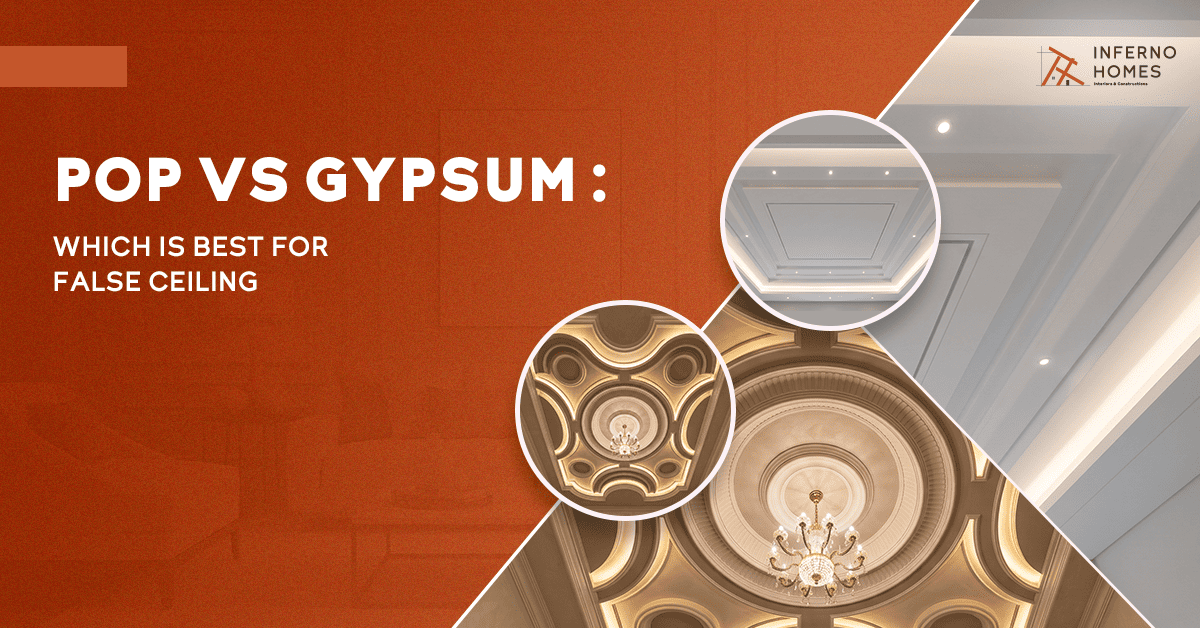
A ceiling is the one thing in a house that everybody looks up to. When lakhs of rupees are being spent on the interiors, it has to be chosen with care. Contractors or Interior designers are a persuasive lot, and even if they were to suggest the cheapest option, it has to go through an arduous round of questions from the homeowner. The pop vs gypsum false ceiling debate is where most of those questions come from. Let’s understand more about the two materials, their differences, and their cost in Bangalore.
We install both materials at Inferno Homes. This guide tells you when we steer clients towards the cheaper option, not only towards the one we like to fit.
What Is a POP False Ceiling?
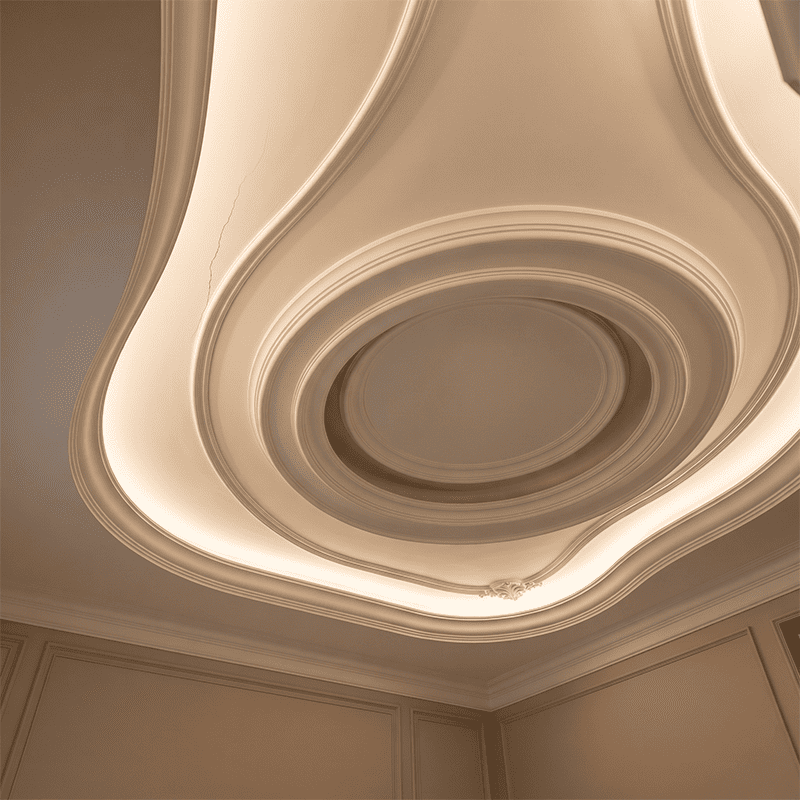
A POP false ceiling is a ceiling of Plaster of Paris, which is put up a few inches below the main slab. When homeowners ask us about the pop ceiling full form, we tell them that it is Plaster of Paris, a white powder that is made by heating gypsum. The irony is a subtle one, and it often eludes even the most seasoned contractors. The powder is mixed with water at the site, and it is spread over a mesh while it is still wet. What is pop ceiling work, then, is partly masonry and partly art, and the final finish depends on the hand that made it.
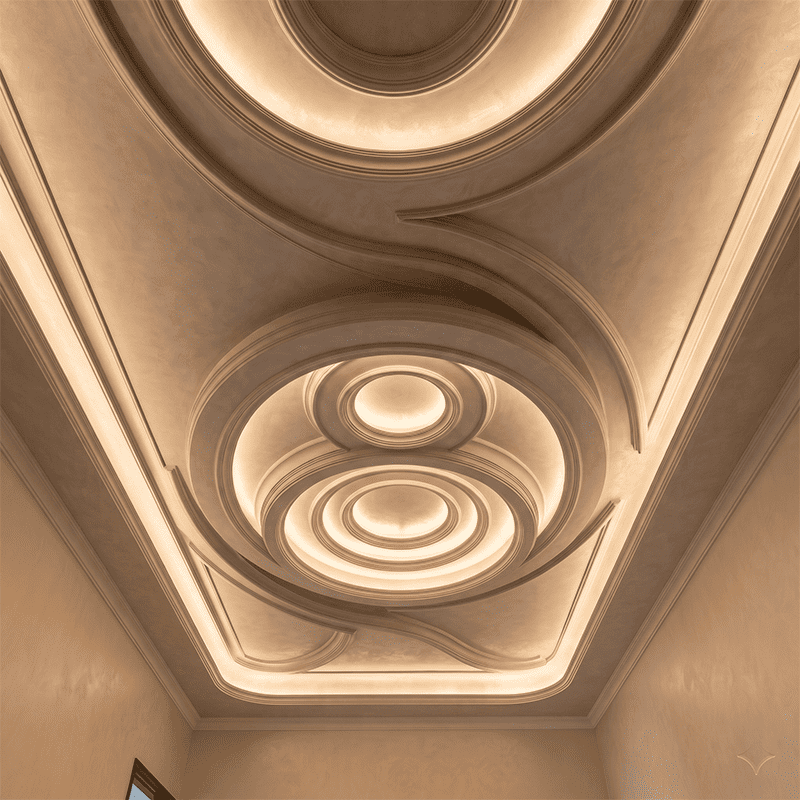
Here is the irony in plain words. Both materials are calcium sulphate. POP is gypsum that has been heated to drive out its water, and the core of a gypsum board is that same plaster, set between two sheets of paper in a factory. So you are not choosing between two minerals. You are choosing between a ceiling cast by hand at your site and one made in a factory.
What Is a Gypsum False Ceiling?
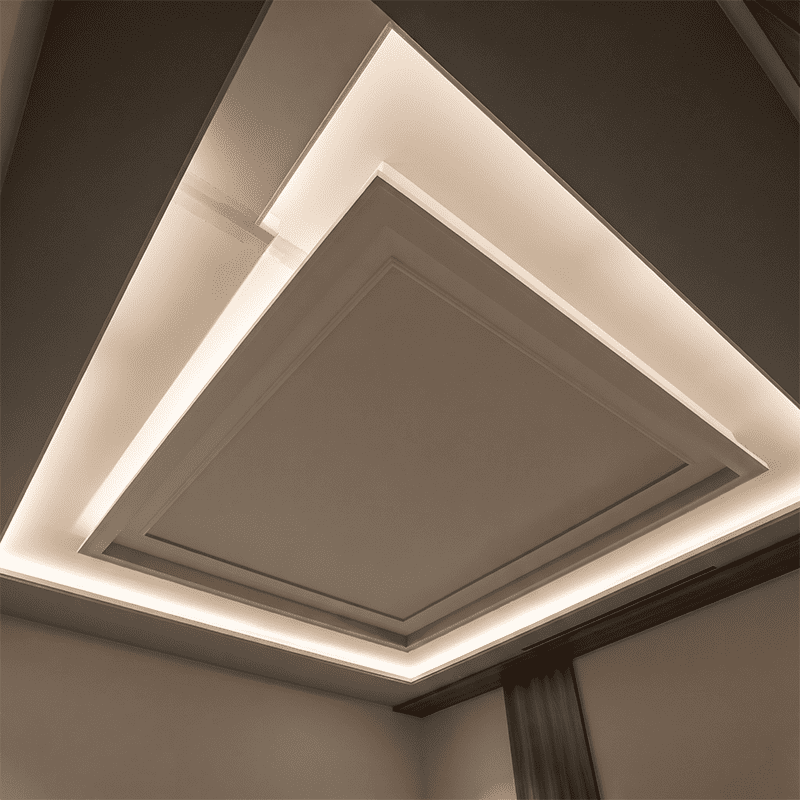
A gypsum false ceiling is the ceiling which is created with ready-made or ready to use gypsum boards. The boards are made in a factory, and they are screwed on to a metal frame which is hung from the slab. Since the board is already finished, only the joints have to be taped and filled at the site, so the work is over in a day or two most of the time. It is not very good with curves though, and a board has to be replaced if water leaks on to it.
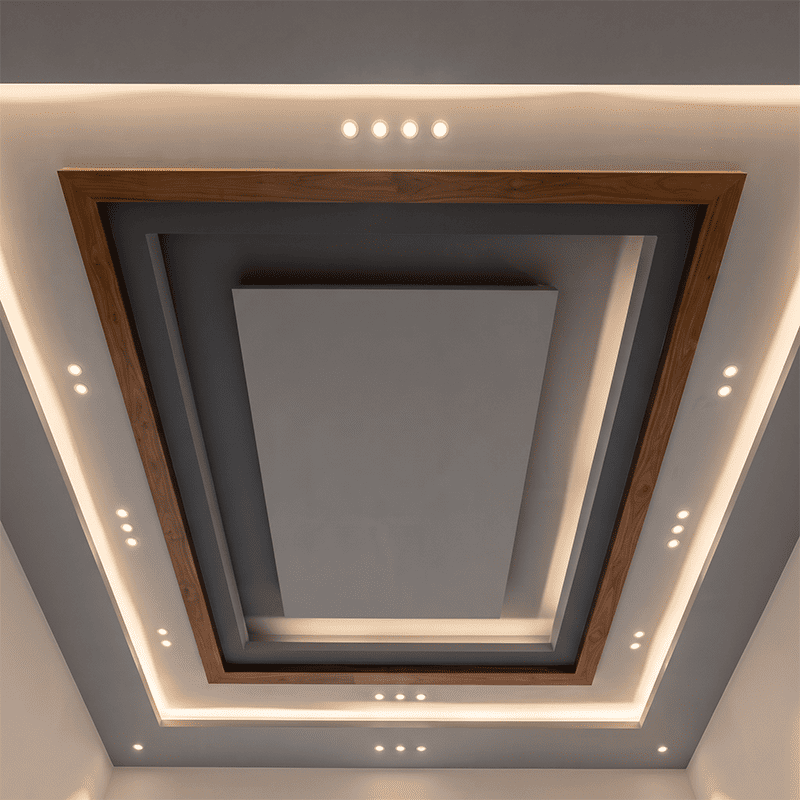
The standard build uses a 12.5 mm gypsum board fixed to a properly anchored galvanised iron (GI) channel framework, followed by joint tape and jointing compound. At Inferno Homes, we choose the board type, frame specification and ceiling drop to suit the room, and list the approved board and channel brands in the project quotation rather than substituting unconfirmed materials on site.
POP vs Gypsum False Ceiling: Key Differences
The difference between gypsum and pop is in the way the two are made, which is decided much before the material reaches your house. When clients ask us about the pop and gypsum difference, we tell them that POP is a powder which is mixed at the site and gypsum is a board which comes ready from a factory. The pop ceiling vs gypsum ceiling comparison is given below, and it sums up the difference between pop and gypsum false ceiling at a glance.

|
Factor |
POP |
Gypsum |
|
Form |
Powder mixed on site | Factory-made board |
| Time per room | 3 to 5 days |
1 to 2 days |
|
Finish |
Depends on the mason | Flat and uniform |
| Best for | Curves and carvings |
Straight, modern designs |
|
Base material |
Calcium sulphate, cast on site | Calcium sulphate, set into boards in a factory |
| After a water leak | Stains; small patches can be repaired |
A soaked board has to be replaced |
|
Our 2026 rate, flat design |
₹65–₹90 per sq ft |
₹85–₹120 per sq ft |
The distinction is a simple one, and it still eludes even the most well-read homeowners. A POP ceiling takes three to five days for a room, whereas a gypsum ceiling is done in a day or two.
Many Bangalore ceilings are actually a mix of the two. The flat ceiling is gypsum board, and POP is used only for the cornice, a border or a curved centrepiece. You get the speed of gypsum and the detailing of POP where it shows.
Advantages and Disadvantages of POP and Gypsum Ceilings
Advantages and Disadvantages of POP Ceilings
Advantages
- It can be moulded into curves, domes and floral borders.
- There are no joints, so it looks like one piece.
- The powder is sold in every hardware shop.
- It is the cheaper of the two, though not by much.
- A small crack can be patched up easily.
Disadvantages
- It takes days to dry, and the painter has to wait till then.
- The house is covered in white dust till then.
- The finish depends on the mason who does it.
- It is the first thing which gets stained by seepage.
- Hairline cracks show up after a few years.
POP cracks do not appear on a fixed schedule. In repair enquiries, we first check the wall-to-ceiling junction, surface movement, workmanship and any sign of seepage. A fine, stable hairline crack may need local filling; a crack that keeps returning needs its underlying cause checked before repainting.
Advantages and Disadvantages of Gypsum Ceilings
Advantages
- The work is over in a day or two.
- The boards are factory-finished, so the surface is flat.
- There is very little dust, which is a relief.
- Moisture-resistant and fire-resistant boards are available for kitchens.
- The cut-outs for lights come out neat.
If the ceiling is going into a kitchen, our kitchen interior designers plan the board, the chimney duct and the lights together, so the ceiling doesn’t have to be cut open later.
Disadvantages
- The boards do not bend, so curves are hard to make.
- A board which gets soaked in a leak has to be replaced.
- It costs a little more than POP.
- The joints show up if they are not taped properly.
- A heavy fan has to be fixed to the slab.
One clarification on the fan: a ceiling fan should never hang from a false ceiling, whatever the material. With POP or gypsum, we run the hook or down rod from the slab, through the ceiling.
In the gypsum ceiling vs pop ceiling debate, it wins on convenience and loses on ornamental work.
When We Don’t Recommend Gypsum
- Top-floor flats with roof seepage, or rooms under a leaking bathroom. Fix the leak first. If it might come back, POP is easier to patch than replacing boards.
- Curved, domed or carved designs. Use POP, or a gypsum ceiling with POP detailing.
- And the other way round: if the house is already lived in and you can’t handle a week of dust and drying, POP is the harder choice.
POP and Gypsum False Ceiling Cost per Square Foot
POP is the cheaper of the two in Bangalore, though not by much. In 2026, we have seen POP go for as low as 55 a foot and gypsum go for as high as 130 a foot in Bangalore, and by foot we mean a square foot. Comparing two quotes is an indispensable step, albeit a tedious one. For one bedroom, the gap is a few thousand rupees at the most, and that is why the pop vs gypsum ceiling choice should not be made on the rate alone.
Those two extremes are not the rate for every room. For a straightforward flat ceiling in Bangalore in 2026, a useful planning allowance is ₹65–₹90 per sq ft for POP and ₹85–₹120 per sq ft for gypsum, including standard materials and installation labour. These are indicative Bengaluru market ranges, not confirmed Inferno Homes invoice rates. Painting, decorative coves, electrical work, lighting and GST are additional unless the written quotation includes them. Ornamental POP can cost more than plain gypsum because of the extra finishing labour.
Example: a 12 × 12 ft bedroom has 144 sq ft of ceiling. At illustrative mid-range rates of ₹75 per sq ft for POP and ₹100 per sq ft for gypsum, the basic ceiling work is approximately ₹10,800 for POP or ₹14,400 for gypsum a difference of ₹3,600 before lights, painting, any special detailing and GST. We would confirm the actual measured ceiling area and specifications before issuing a quote.
If the false ceiling is one part of a bigger job, such as new wiring, painting or a full flat makeover, see how we plan and price it as part of our home renovation services in Bangalore.
What Affects False Ceiling Installation Cost?
It is the design. A plain flat ceiling is the cheapest one, and the bill goes up with every layer, cove or curve which is added to it. The lights are where the budget goes for a toss though, because every cut-out and every LED strip is counted separately, and the painting and the GST are extra as well. The nuances of a quotation are seldom appreciated by the layman. An itemised quote is the only way to compare two contractors, which is the same advice that we give in our MDF vs plywood guide.
Here is an illustrative 2026 Bangalore false-ceiling cost breakdown for planning—not an invoice from a completed project. Rates depend on material grade, design, quantity and site conditions:
|
Line item |
How it is charged |
Indicative 2026 rate |
|
Flat ceiling (POP or gypsum) |
Per sq ft | POP ₹65–₹90; gypsum ₹85–₹120 |
| Cove / extra layer | Per running ft |
₹120–₹250 |
|
Light cut-out |
Per point | ₹90–₹150 (cut-out only) |
| LED strip with profile | Per running ft |
₹250–₹450 |
|
Painting (primer + 2 coats) |
Per sq ft | ₹18–₹28 |
| GST | On the total |
18% |
Planning a false ceiling for your home? Share your room dimensions or floor plan, site photos and preferred lighting style with Inferno Homes. We can prepare an itemised estimate covering ceiling material, GI framework, cove work, light points, LED profiles, painting and applicable tax, so you can compare the complete cost not just the per-square-foot rate.
What Homeowners Can Learn from Two of Our Bangalore Projects
Allure One : Battarahalli, Bengaluru. Our portfolio shows bedroom interiors at this property. For a similar room, we would check ceiling height, fan anchoring and wardrobe clearance before choosing a simple perimeter gypsum drop over a full ceiling. Our wardrobe designers plan the shutter height and the ceiling drop together. Homeowner benefit: fewer unnecessary panels and more headroom.
Oceanus Classic : Kodigehalli, Bengaluru. Our featured project shows a wooden living-room partition with LED detailing. For a similar layout, plan ceiling light points, wiring and driver access with the feature wall before installation. Homeowner benefit: fewer avoidable cut-outs, less rework and easier servicing.
Conclusion
So, pop or gypsum which is best for false ceiling? When clients ask us this, we tell them that it is gypsum for most Bangalore apartments, since the work is quicker and cleaner. POP is the better choice only when the design has curves or carvings in it. The verdict is a subtle one, and it often eludes even the most diligent homeowners. If you are still wondering pop or gypsum which is better for your home, then go through our living room false ceiling design ideas first. The gypsum vs pop question is decided by the design, and the design is decided by you.